A typing certificate will never replace a formal qualification, but it can still do real work on a resume - if you know what it's actually good for.
What a Certificate Signals to an Employer
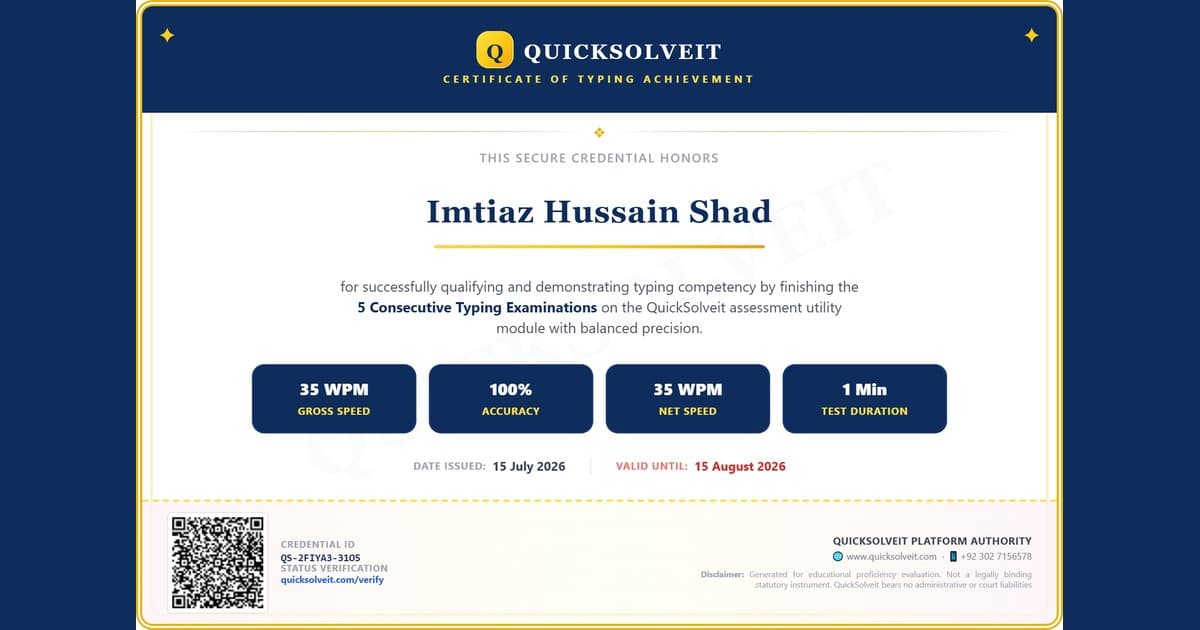
Most hiring managers skimming a stack of CVs aren't looking for a credential so much as a quick, verifiable signal: does this candidate actually type at the speed they claim? A certificate with a real WPM and accuracy figure, backed by a QR code an employer can tap to verify, answers that question faster than a bullet point that just says 'good typing skills.' You can generate your own QR-verified certificate after completing five typing tests on QuickSolveIt.
When It Matters Most
- Clerical, data-entry, and administrative roles where typing speed is explicitly part of the job description
- Freelance transcription or virtual assistant work, where clients often ask for proof upfront
- Entry-level applications where a candidate has little else to differentiate themselves yet
When It Won't Move the Needle
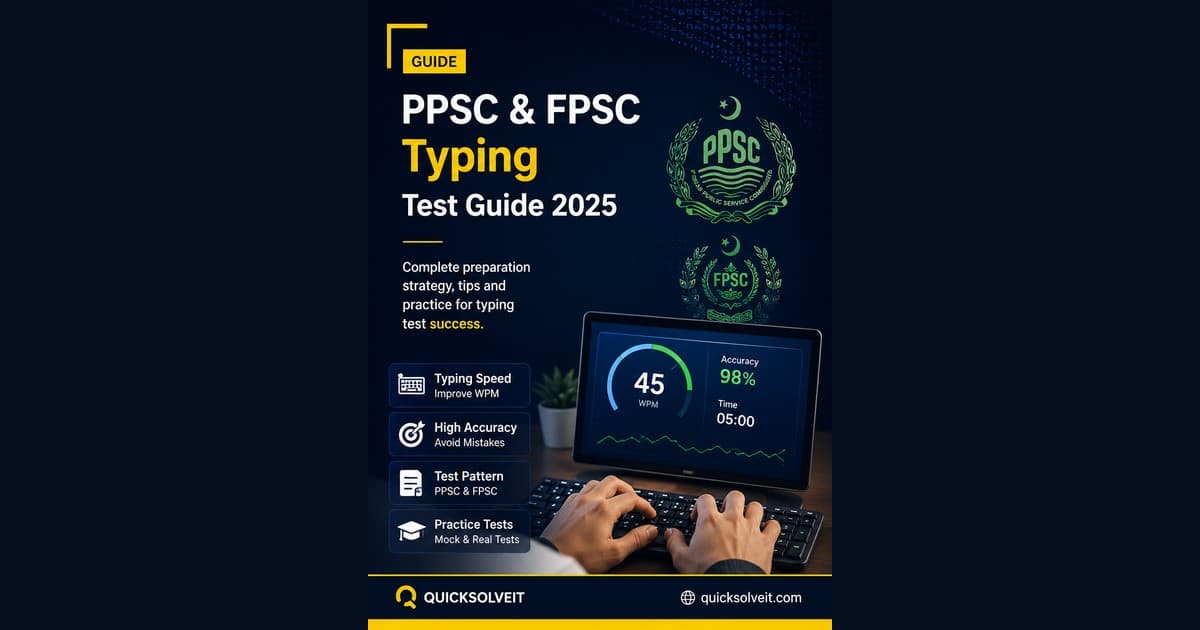
For government posts like PPSC or FPSC, the official in-person or supervised typing test is what actually counts - a QuickSolveIt certificate is practice and proof of consistency, not a substitute for that exam. Be upfront about the difference rather than implying otherwise.
How to Use It Well
List the WPM and accuracy figures directly on your resume rather than just linking the certificate, and keep the verification link handy in case a recruiter wants to check it. Retake the test periodically on QuickSolveIt's free typing test - a certificate from three years ago says less about your current speed than a fresh one from this month.